
'The BRICS anthem has to necessarily be an anthem of Vedic times -- Walk together, Dream together, Achieve together.' 'And who knows it better than Modi?' says Tarun Vijay.
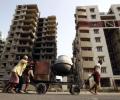
NRIs are increasingly buying properties in India online.
It would be a chance lost if India cannot learn from and lean more on China to kick-start trade, infrastructure programmes, and increased ties, says Ravi Agrawal

Having invested close to $15 billion in Indonesia, Indian firms have lined up further $15-16 billion investments.

Modi, who is undertaking his first visit to China as prime minister, will reach the ancient city of Xi'an, the home town of President Xi Jinping, for a summit meeting, an unusual departure from normal protocol and seen as a reciprocal gesture by the Chinese leader who was hosted by Modi in Ahmedabad when he visited India in September last year.

India's unpopularity coincides with China lengthening its shadows in Nepal, says Rajeev Sharma.

Pakistan should also be accorded the same 'privilege', the Global Times said.
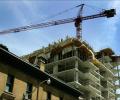
People are not just splurging on clothes, mobiles and household goods through the online route, they are also looking at cars and even houses.

Srikanth Kondapalli on what to expect from the seventh BRICS summit meeting to be held in Russia in July.

China has asserted that it had never waged a war to occupy 'an inch of land of other countries', days after Bharatiya Janata Party's prime ministerial candidate Narendra Modi slammed the Communist giant for its "expansionist mindset".
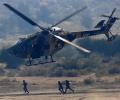
'Given the present force levels, India cannot fight and win.' 'India can't hope to terminate the conflict on India's terms and impose the nation's will upon the adversaries,' says Brigadier Gurmeet Kanwal (retd).

Four major political takeaways from Narendra Modi's much-anticipated trip to China

Gandhi said there's a lot of space for cooperation between the United States and India in the creation of jobs and in the education sector.

When a Chinese warship entered Japanese waters, the Indian commander called on China to maintain discipline at sea. Dr Rajaram Panda explains the significance of the Malabar exercises between India, Japan and the US.

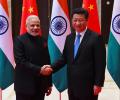
Xi and Modi met soon after their arrival at a summit of the BRICS group of emerging powers. Xi said the two countries should join hands in setting global rules and suggested he attend the November meeting of the 21-nation APEC in Beijing, as well as take part in Chinese-led regional initiatives.

India is keen on the issue of equal share holding since it doesn't want a repeat of the distortions that have crept into Bretton Woods institutions like International Monetary Fund, World Bank and the Asian Development Bank in which rich countries like the US and Japan have a strangle hold.

'Breaking out of the corner into which China has painted itself would be a feat.' 'Whether Xi is able to pull it off will be known in the coming days,' says B S Raghavan, the distinguished civil servant and member of the Joint Intelligence Committee at the time of China's invasion of India.

Indians in countries like the United States, China, Australia, Japan, Singapore, Egypt, Israel and South Africa celebrated the day with hoisting of the national flag and singing of patriotic songs.

'There will be some issues of contention, especially on H1B visa and on trade policy.'

India and China have to narrow down differences and build on convergences by exploiting the potential of Panchsheel, the five principles of peaceful co-existence propounded by the two countries along with Myanmar in 1954, Vice President Hamid Ansari said on Saturday.

Nevertheless, border dispute will feature prominently on Modi's agenda but the matter won't be discussed at length. Nayanima Basu reports

Beijing is clearly rattled by the Dalai Lama's visit. Unlike the 2009 visit, which was a four-day religious tour, the current visit is a high-decibel, 10-day affair, without the fig leaf of a "religious event", reports Ajai Shukla.

Confronting a slowdown in growth, China says it will only increase its defence budget by 7.6% this year, against the anticipated rise of between 20% and 30%. 'It is difficult to explain the reduction in the Chinese defence budget,' says Claude Arpi. 'Is there a hidden budget? Possibly!'

The two countries also asked all nations to stop cross-border movement of terrorists and asserted that a decisive collective response from the international community without 'double standards and selectivity' was required to combat the threat of terrorism.

'Whether it's investments in Kashmir, building naval facilities, or selling top-of-the-range military equipment, Pakistan could well benefit more under Xi's watch.' 'Do Chinese concerns about the 'Islamisation' of Pakistan give it pause about how quickly to move forward with security and economic projects? At the moment the indication is quite the opposite: China is doubling down on its support to Pakistan, partly because of its fears about where the country is headed.'
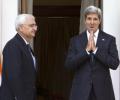
The United States on Monday assured India that its concerns over Taliban insurgents gaining legitimacy without severing their terror links will neither be "overlooked or undermined" during the talks with the Islamic fundamentalist group.

India and Russia on Thursday decided to expand cooperation in various sectors as they signed 16 pacts, including on joint manufacture of 226 military helicopters.

'The public has unfair expectations from Mrs Swaraj who is in Islamabad primarily for the Heart of Asia Conference. To restore India's position among stakeholders on Afghanistan is a fair one but to expect her to do more on the Indo-Pak front without requisite preparatory work is unrealistic.'

'One lesson to emerge out of the Modi-Putin summit is that India can be more self-confident that it possesses inherent strengths to leverage its interlocutors to influence Pakistani policies,' says Ambassador M K Bhadrakumar.

Outlining seven principles of engagement for closer cooperation between India and China, Prime Minister Manmohan Singh on Thursday said the two countries should show sensitivity to each other's interests and sovereignty and move quickly to resolve the boundary issue.

'Today the Chinese think they can slap India, and there will be no consequences.' 'They must be made to feel the consequences through any and all means,' says Rajeev Srinivasan.

'The Modi-Xi and Modi-Obama meetings, with an interval of just 12 days, are juxtaposed superbly at a crucial point in the prime minister's life. Can Modi carve out a win-win situation with the superpower and the emerging superpower at the same time?'

In spite of irritants and hiccups in the relationship, a few deliverables are expected of the prime minister's visit to China, says Rup Narayan Das.

'Political meetings will be a mere side show; the main show is economic investment and the business partnership. The success of Modi's US visit will be judged on the basis of India's ability to attract American investment and setting up of manufacturing in India to give jobs to millions,' says Colonel Anil A Athale (retd).
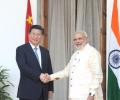
With the continuing stand-off in Ladakh casting a shadow over the Sino-India talks, Prime Minister Narendra Modi on Thursday raised 'serious concerns' over the repeated incidents along the border and sought an early settlement of the boundary question.
Components manufactured in India are low-value products like casing and box packaging that constitute 5% of the bill for materials required in phone manufacturing.

Biden said, "One of the reasons why President Obama called our relations with India, quote, "a defining partnership of the century ahead" is that India is increasingly looking east as a force for security and growth in Southeast Asia and beyond."

'Chinese leaders rarely receive their foreign guests in cities other than Beijing. Such respect for India!' 'Does it mean that Modi could replicate "the warmth and unconventional way" by sending Indian troops into Tibet, as Xi did in Chumur (Ladakh) when he arrived in India? Of course, Indians are far too polite to do so,' says Claude Arpi.

'Until India fully absorbs the fundamentals of international relations, it will continue to get evil for good,' says Brahma Chellaney.

'If you say I won't talk to them at all, does terrorism stop?' 'Even if they say they will give up terrorism, "I will fight terrorism along with you," but even then you say I still won't talk to you until you do the following things, then that is a political call.'
